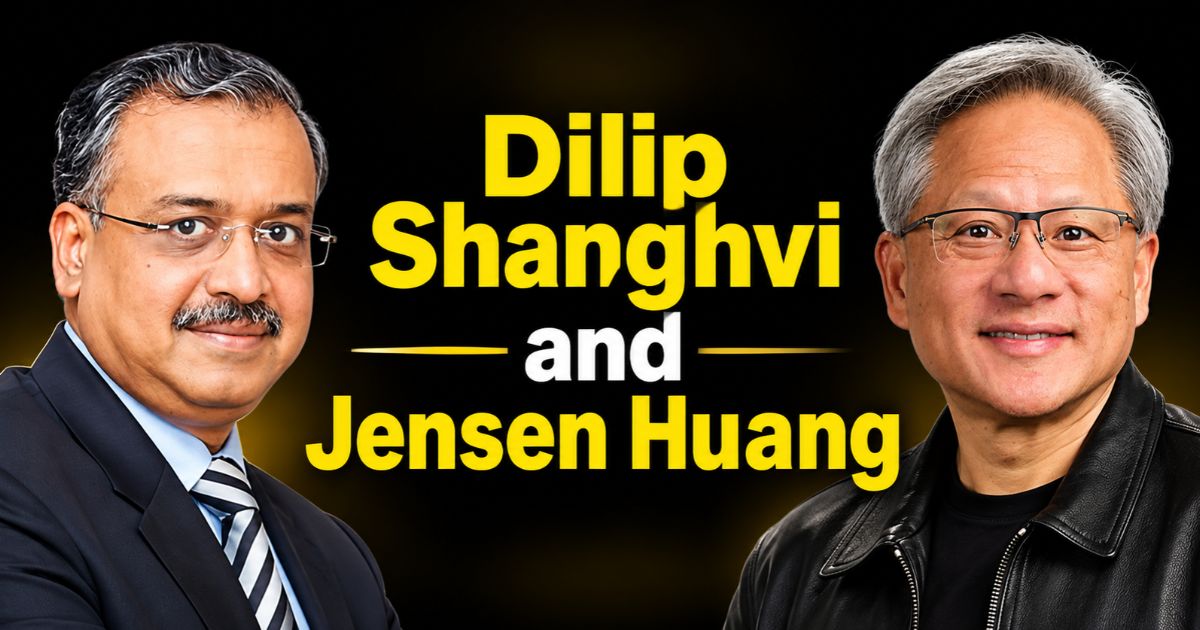
Dilip Shanghvi and Jensen Huang: Net Worth and Career 2026
Dilip Shanghvi built Sun Pharma into India’s largest drug maker. Jensen Huang turned Nvidia into one of the most valuable companies on earth. One works in medicine, the other in computing, yet both made patient bets that paid off on a massive scale.
This guide gives you a clear profile of each leader, their latest 2026 updates, a side by side comparison and practical lessons. Figures come from Forbes real time tracking, company announcements and Britannica.
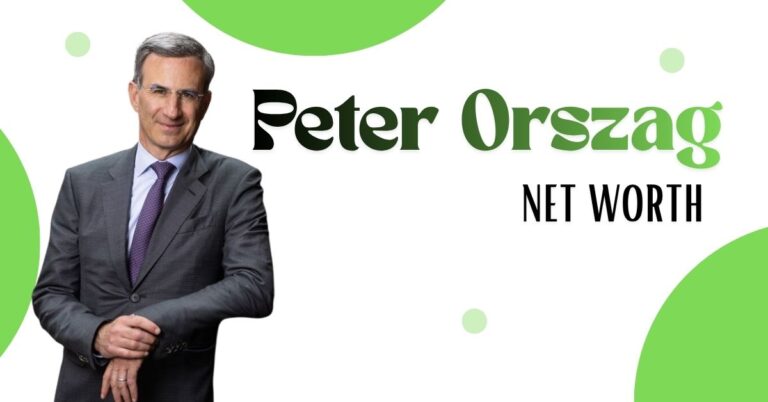
Quick answer: Dilip Shanghvi is the founder and executive chairman of Sun Pharma. Jensen Huang is the cofounder and CEO of Nvidia. Forbes showed Huang at about $180.9 billion on 3 November 2026 and Shanghvi at about $24.8 billion in its April 2026 tracking.
Profile Summary Table
| Feature | Dilip Shanghvi | Jensen Huang |
| Full name | Dilip Shantilal Shanghvi | Jensen Huang |
| Born | 1 October 1955, Amreli, Gujarat | 17 February 1963, Tainan, Taiwan |
| Age | 71 | 63 |
| Nationality | Indian | American (born in Taiwan) |
| Company | Sun Pharmaceutical Industries | Nvidia |
| Current role | Executive Chairman since 1 September 2025 | Cofounder, President and CEO |
| Company founded | 1983 | 1993 |
| Industry | Pharmaceuticals | Semiconductors and AI computing |
| Education | Commerce degree, University of Calcutta | Electrical engineering at Oregon State, master’s at Stanford |
| Net worth | About $24.8 billion (Forbes, April 2026) | About $180.9 billion (Forbes real time, 3 November 2026) |
| Ownership | Family holds about 54 percent of Sun Pharma | Owns about 4 percent of Nvidia |
| Home | Mumbai | Los Altos, California |
Who Is Dilip Shanghvi?
Dilip Shanghvi is an Indian industrialist and the founder of Sun Pharma. He is known as a private, data driven leader who prefers results over publicity.
Early Life and First Steps
Shanghvi was born in Amreli, Gujarat, and grew up around the medicine trade. His father ran a wholesale drug distribution business. He finished a commerce degree at the University of Calcutta in 1982.
In 1983, he started making medicines himself with a small loan from his father. His first products targeted psychiatric conditions, a niche that bigger firms had ignored. That choice gave him room to grow without fighting giants head on.
Building Sun Pharma
Sun Pharma went public in 1994 and bought its first overseas business, Caraco in Detroit, in 1997. Growth came from steady organic expansion and many acquisitions.
| Year | Milestone |
| 1983 | Sun Pharma begins with a handful of products |
| 1994 | Initial public offering |
| 1997 | First international acquisition, Caraco |
| 2015 | Ranbaxy deal completed, making Sun the largest pharma company in India |
| 2023 | Concert Pharmaceuticals acquired to strengthen specialty drugs |
| 2025 | Kirti Ganorkar becomes Managing Director, Shanghvi moves to Executive Chairman |
| 2026 | Agreement to buy Organon announced in April |
The Ranbaxy acquisition is his best known turnaround story. The company faced a rough patch afterward, then recovered and grew stronger.
Latest Updates on Shanghvi
- Leadership change: He stepped back from the managing director role in September 2025 but still chairs the board and guides the specialty portfolio.
- Next generation: His son Aalok became chief operating officer, and his daughter Vidhi joined as an executive director.
- Organon deal: Sun Pharma agreed to buy Organon for an estimated $11.8 billion including debt, paid fully in cash. The deal should more than double yearly revenue to about $12.4 billion and push Sun into biosimilars.
- Timeline: Management says closing is expected in the January to March 2027 quarter.
- Results: Sun Pharma reported a net profit of about ₹11,479 crore on revenue of about ₹58,220 crore for fiscal year 2026.
Who Is Jensen Huang?
Jensen Huang is a Taiwanese born American engineer. He has led Nvidia since he cofounded it, which gives the company rare continuity. He is also famous for his black leather jacket and plain speaking style.
Early Life and Education
Huang was born in Tainan and moved to the United States as a child. He studied electrical engineering at Oregon State University and earned a master’s degree at Stanford. He then worked at chip companies AMD and LSI Logic, where he learned how semiconductors are designed and sold.
Building Nvidia
In 1993, Huang cofounded Nvidia with Chris Malachowsky and Curtis Priem. The idea took shape during meetings at a Denny’s diner. Nvidia went public in 1999 and became known for gaming graphics cards.
The real turning point was CUDA, a software platform launched in 2006 that let GPUs handle general computing. Many investors doubted it at first. Years later, deep learning researchers found GPUs ideal for training neural networks, and Nvidia was ready.
| Year | Milestone |
| 1993 | Nvidia is founded |
| 1999 | GeForce 256 launches and the company lists on the stock market |
| 2006 | CUDA opens GPUs to general computing |
| 2012 onward | Deep learning adopts GPUs at scale |
| 2025 | Nvidia becomes the first company valued at $5 trillion |
| 2026 | Market value moves close to $6 trillion in October |
Latest Updates on Huang
- Net worth peak: His fortune crossed $200 billion in May 2026 and touched about $203 billion.
- Pullback: After a tech stock dip, Forbes showed him near $199 billion in early October and about $180.9 billion on 3 November.
- Ranking: He sits seventh on the Forbes real time billionaires list and eighth on the 2026 Forbes 400.
- Market position: Nvidia is widely estimated to control about 80 percent of the market for cutting edge AI chips.
- Giving: He donated $30 million to Stanford for an engineering center and $50 million to Oregon State University in 2022.
Net Worth Comparison
Net worth for both men depends on share prices, so numbers change every trading day. Treat the table as a snapshot.
| Factor | Shanghvi | Huang |
| Main source of wealth | Sun Pharma shares held by the family | Nvidia shares |
| Latest Forbes figure | About $24.8 billion (April 2026) | About $180.9 billion (3 November 2026) |
| Recent peak | Above $28 billion in May 2025 | About $203 billion in May 2026 |
| Wealth type | Self made, family controlled | Self made, founder owned |
| Company value driver | Specialty drugs and acquisitions | AI chips and data center demand |
Huang’s fortune is far larger because Nvidia’s market value is many times that of Sun Pharma. Still, both men hold concentrated stakes in the companies they built.
Company Snapshot: Sun Pharma vs Nvidia
Looking at the companies shows why the two fortunes sit so far apart. Both firms sell mainly to global customers, but they serve very different needs.
Also Read This: Growth Navigate Funding Guide
| Factor | Sun Pharma | Nvidia |
| Core products | Specialty and generic medicines | AI chips, GPUs and software |
| Global reach | About two thirds of revenue from overseas | Customers in cloud, gaming and enterprise |
| Latest scale | Revenue of about ₹58,220 crore in fiscal 2026 | Market value near $6 trillion in October 2026 |
| Market position | Largest drug maker in India | Roughly 80 percent of the advanced AI chip market |
| Next big move | Organon acquisition and biosimilars | Next generation AI platforms |
Why this matters: A drug maker grows through approvals, plants and acquisitions. A chip company grows through design cycles and software ecosystems. That difference explains why Nvidia’s value moves faster, while Sun Pharma builds steadily.
Dilip Shanghvi and Jensen Huang: Leadership Compared
| Trait | Shanghvi | Huang |
| Public profile | Private, rarely gives interviews | Highly visible, frequent keynotes |
| Decision style | Analytical and cautious | Bold and vision driven |
| Growth method | Acquisitions plus research | Platform building plus research |
| Core belief | Build strength before scale | Build the platform before the market |
| Succession | Planned handover to a new MD and family | Still leads as CEO |
What They Share
- Long term thinking: Shanghvi moved from basic generics into specialty medicines. Huang funded CUDA years before AI demand arrived.
- Deep product knowledge: Both stay close to the science and engineering behind their products.
- Willingness to adapt: Sun Pharma grew from a niche local player to a global group. Nvidia grew from gaming cards to AI data centers.
Lessons for Entrepreneurs
- Pick a gap and own it. Shanghvi started with psychiatric drugs that others skipped.
- Invest before the payoff. Huang backed CUDA when returns looked uncertain.
- Build real capability. Quality manufacturing and chip design, not marketing, created lasting strength.
- Plan succession early. Shanghvi shifted roles and prepared the next generation while the company was strong.
- Stay patient. Both leaders measured progress in decades, not quarters.
Conclusion
Dilip Shanghvi and Jensen Huang show that big companies can start small and quiet. Shanghvi grew Sun Pharma through careful deals and specialty medicines, and he is now betting on Organon to reach a new scale. Huang grew Nvidia through platform bets, and AI demand made it a giant.
Their paths differ in style, but the lesson is the same. Choose a direction, build strength and stay patient. Check live trackers for the newest net worth numbers, since both fortunes move with the stock market.
Frequently Asked Questions
Who is Dilip Shanghvi?
He is the founder and executive chairman of Sun Pharma, India’s largest pharmaceutical company. He started it in 1983.
Who is Jensen Huang?
He is the cofounder, president and CEO of Nvidia. He has led the company since 1993 as it grew from gaming graphics to AI computing.
Who is richer, Dilip Shanghvi or Jensen Huang?
Jensen Huang is far richer. Forbes showed him near $180.9 billion on 3 November 2026, against about $24.8 billion for Shanghvi in April 2026.
Is Dilip Shanghvi still the managing director of Sun Pharma?
No. Kirti Ganorkar became Managing Director on 1 September 2025, and Shanghvi continues as Executive Chairman.
Why is Jensen Huang important to artificial intelligence?
His company makes the GPUs and CUDA software that train and run most advanced AI models. That gives Nvidia a central role in the AI boom.